1. The 10 Hidden Costs of Home Security Systems
Here is every significant hidden cost US homeowners encounter, how much it typically costs, and how to avoid it:

| Hidden Cost | Typical Amount | How Common | How to Avoid |
|---|---|---|---|
| Early termination fee | 75% to 100% of remaining contract | Very common (ADT, Vivint) | Choose no-contract providers |
| Alarm permit (city/county) | $25 to $100/year | Required in most US cities | Register on setup day |
| False alarm fine | $50 to $500+ per incident | Grows with repeat offences | Use video verification monitoring |
| Activation fee | $0 to $230 one-time | Common with contracted systems | Negotiate or choose no-fee plans |
| Cloud video storage | $3 to $15/month per camera | Very common | Confirm if included in your plan |
| Service call / repair fee | $50 to $200 per visit | Common after warranty expires | Choose extended warranty plans |
| Auto-renewal clause | Locks you in for extra year | Buried in most contracts | Set calendar reminder 30 days before renewal |
| Equipment upgrade fee | $100 to $500+ | Charged mid-contract by some providers | Confirm upgrade policy before signing |
| Relocation / move fee | $99 to $200 (e.g. Vivint $150) | Applies to most pro-installed systems | Check move policy before signing |
| Price increase mid-contract | 2% to 5% annually (many providers) | Very common | Lock in fixed-rate contracts if available |
Pricing Disclaimer: All pricing data above is sourced from publicly available third-party reviews as of April 2026. Prices are subject to change. Always confirm current terms directly with the provider before purchasing.
2. The Early Termination Fee Trap
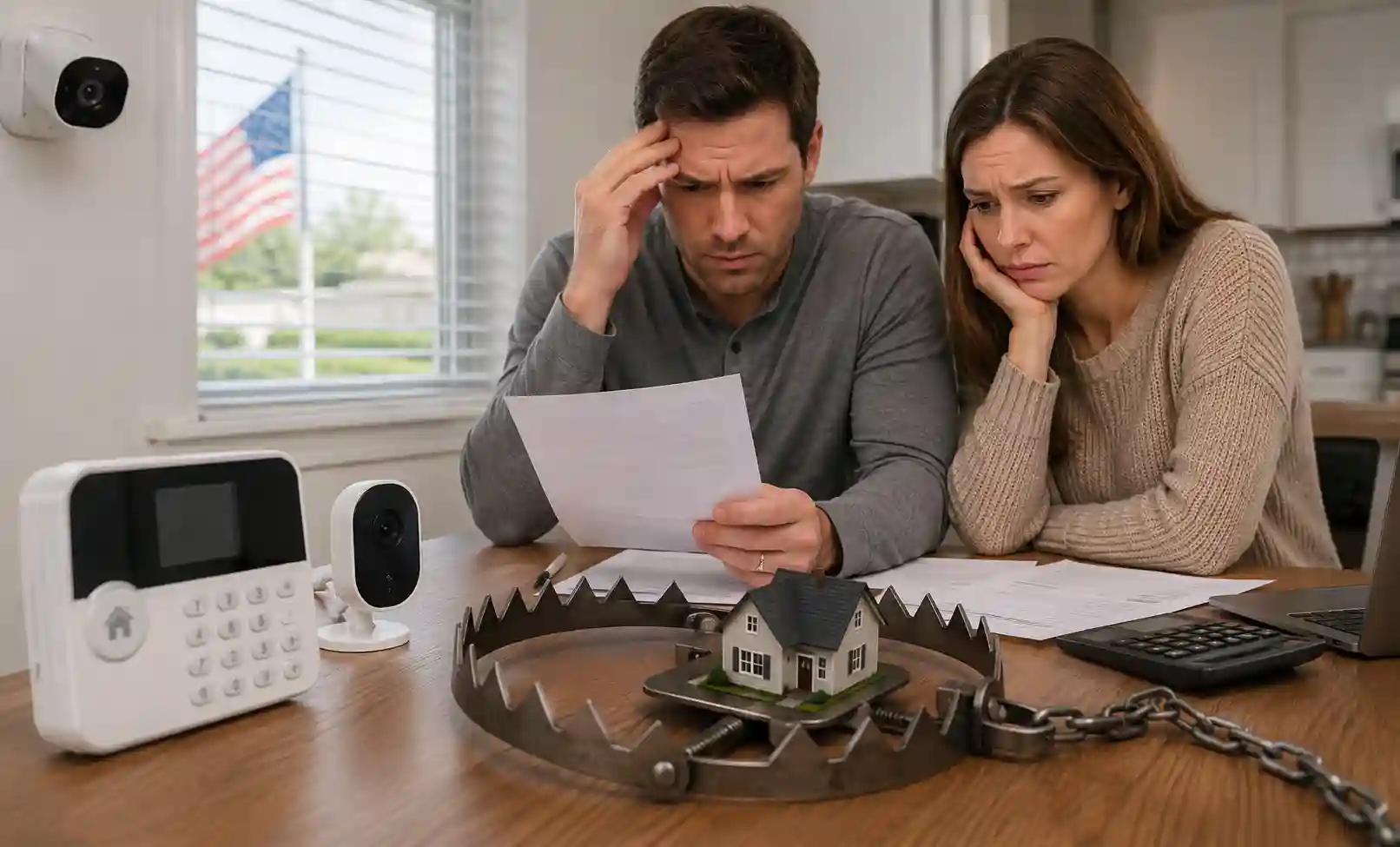
This is the most financially damaging hidden cost in the home security industry. Many major providers require a 2 to 3-year monitoring contract. If you cancel early, you pay a termination fee based on your remaining contract balance.
How Much Can an Early Termination Fee Cost?
ADT charges up to 75% of the remaining monthly monitoring charges when you cancel early. On a 36-month contract at $34.99 per month, if you cancel after 12 months, you still have 24 months left. Your termination fee could be up to 75% of that remaining balance, which is 24 x $34.99 x 75% = $629.82.
Vivint works differently. If you financed your equipment over 60 months, cancelling monitoring does not cancel the equipment financing. You still owe the full remaining equipment balance regardless of whether you keep the monitoring service. On a $1,500 equipment package financed at $25 per month over 60 months, cancelling at month 12 still leaves you owing $1,200.
High Risk Alert: Always read the cancellation section of your contract before signing. Ask specifically: "What is the early termination fee if I cancel at month 12?" and "What happens to my equipment financing if I cancel monitoring?" Get the answers in writing before you commit.
ADT Cancellation Fee: What You Need to Know
ADT's professionally installed systems come with a 36-month contract (24 months in California). To cancel, you must call ADT customer service at 800-238-2727. Cancellation cannot be done online or by email.
- ADT early termination fee: up to 75% of remaining monthly charges
- California exception: 24-month contract term instead of 36 months
- ADT Self Setup customers: no long-term contract, no termination fee
- ADT's money-back guarantee applies only to system-related technical issues within the first 6 months — not for customers who change their mind
3. Alarm Permits: The Legal Requirement Nobody Mentions
Almost every US city and county requires homeowners to register their monitored alarm system with local authorities and pay for an alarm permit. This is a legal requirement in most jurisdictions, not optional.
How Much Do Alarm Permits Cost?
- Initial permit: $25 to $100 in most US cities
- Annual renewal fee: often lower than the initial cost, typically $10 to $50
- In Los Angeles, operating without a permit is illegal and can result in fines of up to $1,000
- Some cities use a no-permit, no-response policy — emergency services will not respond to alarms at unregistered addresses
What Happens If You Skip the Permit?
If emergency services respond to an alarm at an unregistered address, most jurisdictions issue a fine of $100 to $1,000 for the first offense. Repeated false alarms at an unregistered address can result in emergency services refusing to respond entirely.
Most security companies will mention permits in their contract documentation, but they do not always proactively guide you through the process. You are responsible for checking your local municipality's requirements.
Action Step: Search "[your city or county] alarm permit" to find your local registration form. Most permit applications take under 15 minutes to complete online. Register within the first week of system installation to avoid any fines.
4. False Alarm Fines: A Bigger Problem Than Most Homeowners Expect
False alarms are one of the most underestimated ongoing costs of owning a monitored security system. Police departments in the US respond to approximately 38 million false alarms per year, and most jurisdictions charge homeowners for each incident after an initial grace period.

Real False Alarm Fine Examples Across US Cities
- Dallas, Texas: First 3 false alarms free per year. 4th to 6th: $50 each. 7th and 8th: $75 each. 9th and above: $100 each
- Many other cities follow a similar escalating structure, with first offenses free and repeat violations costing $50 to $500+
- In some jurisdictions, habitual false alarms can result in emergency services refusing to respond
What Causes False Alarms?
- Motion sensors triggered by pets or heat vents set at high sensitivity
- Door sensors triggered by wind or poorly sealed frames
- Incorrect arming, particularly during the entry and exit delay period
- Low battery warnings that trigger the alarm panel
- DIY placement errors such as sensors mounted at the wrong height or angle
How to Reduce False Alarms
- Use video verification monitoring: a monitoring agent reviews camera footage before dispatching services — this eliminates most false dispatches
- Adjust motion sensor sensitivity settings to medium rather than high
- Add secondary contacts to your account so someone else can cancel a false alarm if you are unavailable
- Test your system every 3 to 6 months and after any changes to your layout
5. The Free Equipment Trap
One of the most common marketing hooks in the home security industry is the offer of free or heavily discounted equipment with a monitoring contract. This sounds like a great deal. In most cases, it is not.

When a provider offers free equipment in exchange for a contract, the cost of that equipment has not disappeared. It has been spread across your monthly monitoring fee over the life of the contract. You are paying for the equipment, just in small installments rather than upfront.
A Concrete Example
A provider offers a $600 equipment package for free with a 36-month monitoring contract at $45 per month. A comparable contract without the free equipment might cost $25 per month. The $20 per month difference over 36 months totals $720. You paid $720 for equipment that retails at $600. The free equipment cost you $120 more than buying it outright.
This is not always the case. Some free equipment promotions genuinely offer value, particularly for high-end systems where the equipment retail value exceeds the total contract premium. The key is to calculate the total cost of the contract, not just the monthly rate.
How to Evaluate a Free Equipment Offer: Add up the total monitoring cost over the full contract term. Compare it to the same monitoring cost from a no-contract provider plus the equipment cost upfront. If the contract total is higher than the no-contract alternative, the free equipment is not actually free.
6. Contract Terms and Auto-Renewal Clauses
Multi-year monitoring contracts include terms that most homeowners do not read carefully before signing. The two most costly ones are early termination fee clauses (covered in Section 2) and auto-renewal clauses.

Auto-Renewal Clauses
Many security monitoring contracts automatically renew for an additional 1-year or even 2-year term at the end of the initial contract period, unless you notify the provider in writing within a specific notice window, often 30 to 60 days before renewal. If you miss that window, you are locked into another year or more of service. Cancelling after auto-renewal still triggers the early termination fee on the new term.
Price Increase Clauses
Some providers reserve the right to increase your monthly rate by 2% to 5% per year during a contract term. On a 3-year contract, a 5% annual increase on a $40/month starting rate results in you paying $44.10 in year 3, not $40.
Contract Comparison: Major Providers (2026)
The table below shows contract terms for the most common providers. All information is sourced from publicly available third-party reviews as of April 2026. Always confirm current terms directly with the provider before signing.
| Provider | Contract Required | Early Termination Fee | Monthly Rate Lock | Move Policy |
|---|---|---|---|---|
| Ring | No contract | None | Yes (month-to-month) | Take system with you |
| SimpliSafe | No contract | None | Yes (month-to-month) | Take system with you |
| ADT (Self Setup) | No contract | None | Month-to-month | Equipment stays (DIY) |
| ADT (Pro Install) | 36 months | Up to 75% remaining | No (rates can rise) | Must repurchase system |
| Vivint | 36 months (if financing) | Full equipment balance owed | No | ~$150 reinstall fee |
Contract terms listed above are sourced from publicly available third-party reviews as of April 2026. Terms may change and vary by state, location, and promotional offer. Brocus Home Security is an independent advisory service. Always read the full contract and confirm all terms directly with the provider before signing.
7. Service Call Fees and Repair Costs
Most people assume that if something breaks on their security system, the company will fix it for free. This is often not the case after the warranty period ends.
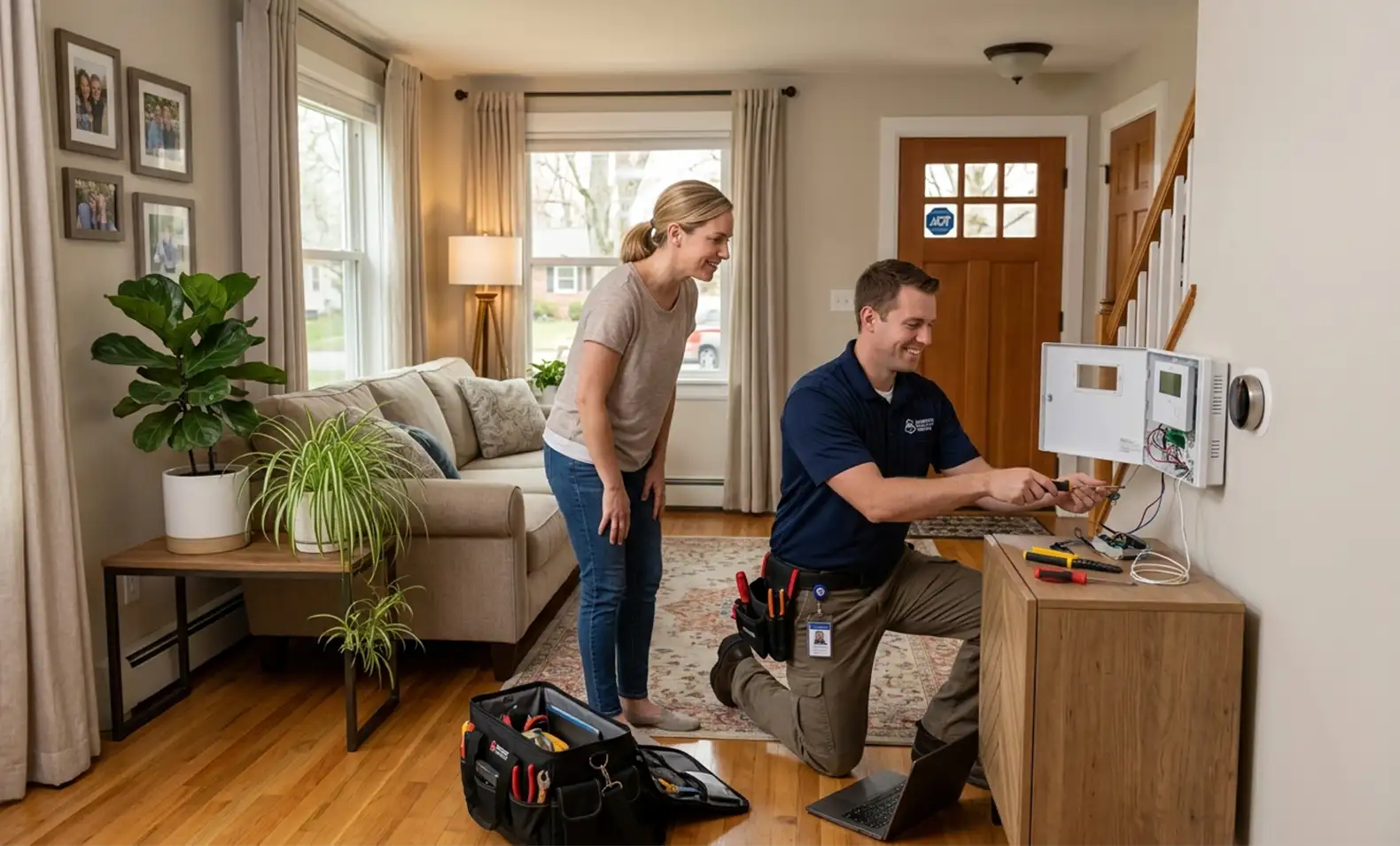
- Service call fees range from $50 to $200 per visit for out-of-warranty repairs
- Battery replacements are almost never covered under warranty and must be done by the homeowner
- Sensor or camera replacements after the warranty period are charged at full retail price
- Some providers sell optional extended service plans for $5 to $10 per month that cover labor and parts. ADT offers a Quality Service Plan at an additional $7 per month that covers repair and replacement throughout the monitoring contract
DIY systems generally have shorter warranties (1 to 2 years) and no on-site service option at all. If something breaks on a Ring or SimpliSafe device after the warranty ends, you replace it yourself.
8. Ten Questions to Ask Before Signing Any Security Contract
Print this list and get written answers to every question before committing to any home security provider:

- What is the total contract length and what happens when it ends?
- What is the early termination fee if I cancel at month 12, month 18, and month 24?
- Does this contract auto-renew? If so, what is the notice period to cancel?
- Is the monthly rate fixed or can you increase it during the contract term?
- Is the equipment included in the contract price or is it financed separately?
- What happens to my equipment financing if I cancel monitoring early?
- Is installation included or is it an additional charge?
- Are there activation fees or one-time setup charges?
- What is covered under warranty and what is the warranty period?
- What does it cost to transfer or reinstall the system if I move?
9. How to Get a Security System With No Hidden Costs
The most effective way to avoid hidden costs is to choose providers that are structurally designed to be transparent. Here is how:
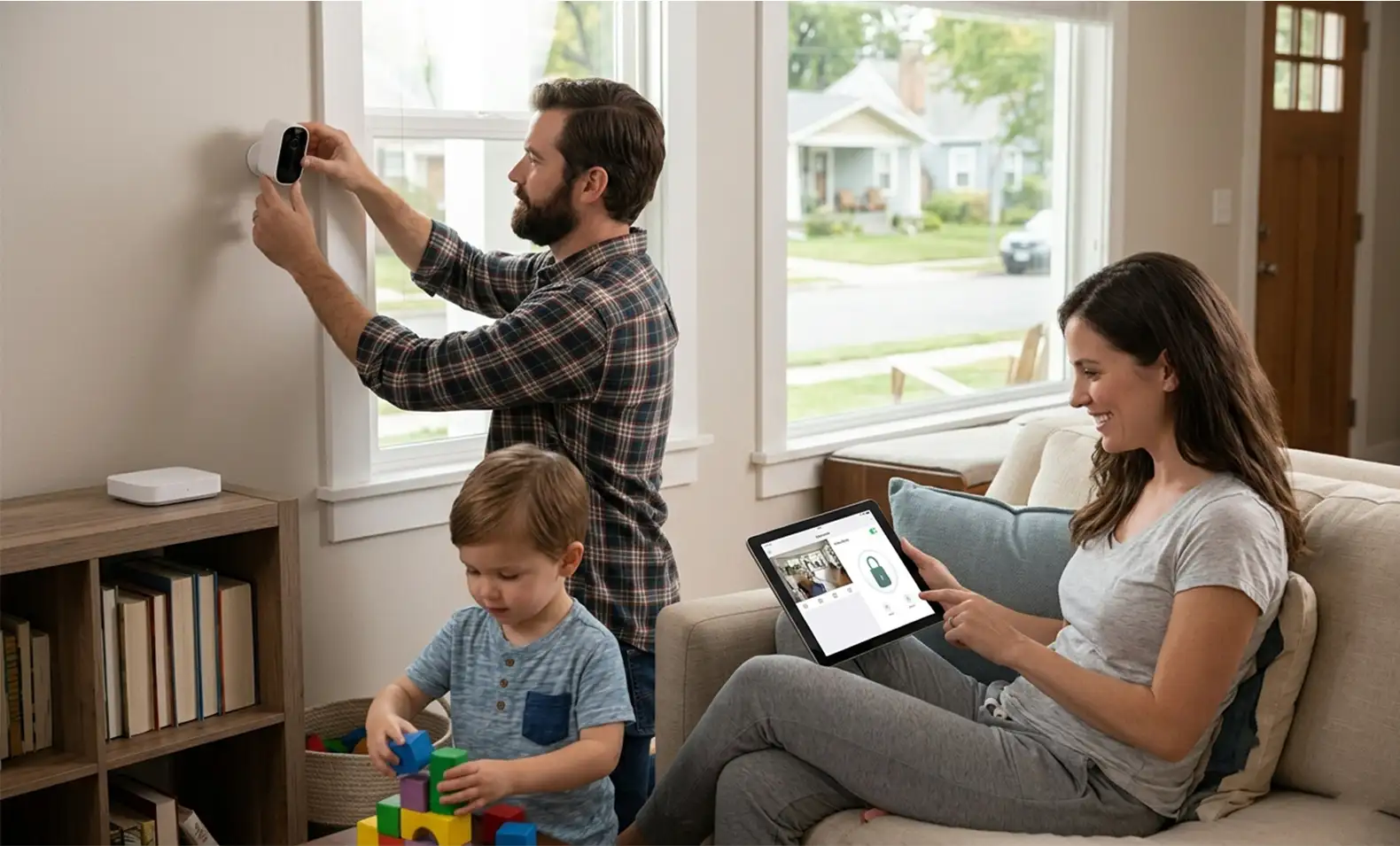
- Choose no-contract monitoring. SimpliSafe, Ring, Cove, and Abode all offer professional monitoring on a month-to-month basis. There are no termination fees because there is no contract to terminate.
- Buy your equipment outright. Purchasing equipment upfront rather than through a contract or financing plan means no hidden equipment balance owed if you cancel. It also means you own the hardware and can take it with you.
- Read the full terms before signing anything. Look specifically for the cancellation clause, the auto-renewal clause, and any rate increase provisions. If these sections are unclear, ask the sales representative to explain them in writing.
- Confirm permit requirements before installation. Check your city or county website for alarm permit requirements. Register on or before the day your system is activated.
- Understand your cloud storage options upfront. Ask specifically whether video storage is included in the monitoring plan or billed separately. Calculate the total annual cost including storage before comparing plans.