1. Number of Cameras by Home Size
The most practical way to determine how many cameras you need is to start with your home size. Use this as your baseline, then adjust based on your specific layout and entry points:
| Home Type | Outdoor Cameras | Indoor Cameras | Key Locations |
|---|---|---|---|
| Studio / 1BR Apartment | 1 to 2 | 1 | Front door + living area |
| 2BR Apartment / Small Home | 2 to 3 | 1 to 2 | Front, back entry, living room |
| 3BR House (avg family home) | 3 to 4 | 2 | Front, back, garage, hallway |
| 4BR+ Large Home | 4 to 6 | 2 to 3 | All entry points, driveway, backyard |
| Large Property / Vacation Home | 6 to 10 | 2 to 4 | Full perimeter + interior |
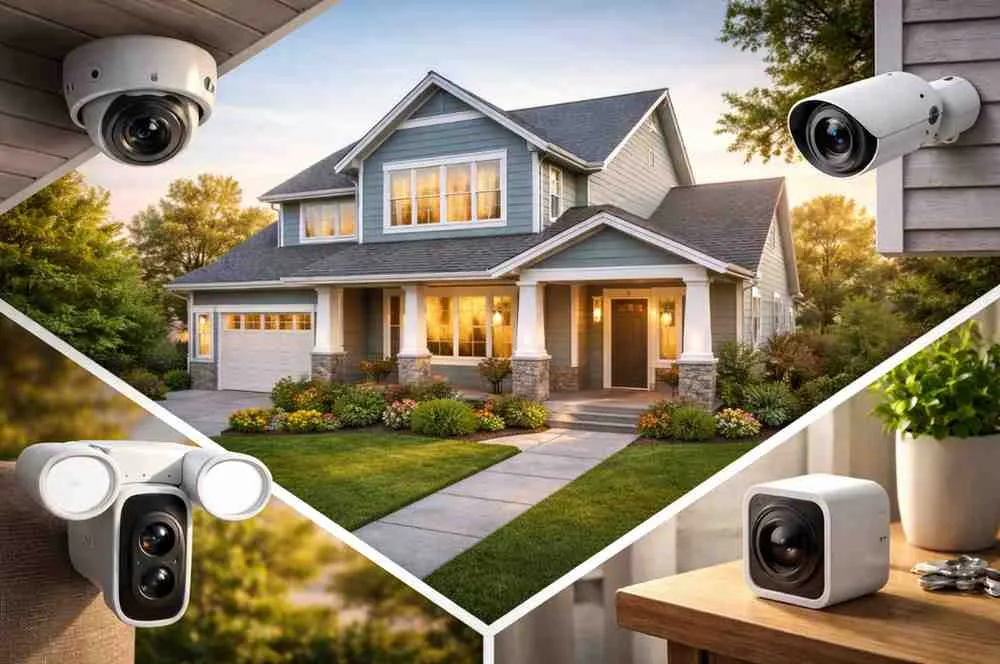
A useful rule of thumb: one camera per 500 square feet of property is a reasonable baseline. Wide-angle cameras with a 120 to 180-degree field of view can reduce the total number you need.
2. The 8 Key Camera Locations for Most US Homes
Strategic placement beats camera quantity every time. Here is where cameras deliver the most protection value, ranked by priority:
| Location | Camera Type | Priority | Why It Matters |
|---|---|---|---|
| Front door | Video doorbell or fixed cam | Critical | 34% of burglars use the front door |
| Back door | Outdoor camera | Critical | Second most common entry point |
| Garage | Outdoor or indoor cam | High | Frequently overlooked access point |
| Driveway / Approach | Wide-angle outdoor cam | High | Early warning of vehicles |
| Side gates / passages | Outdoor camera | Medium | Blind spot in most setups |
| Main hallway (indoor) | Indoor camera | Medium | Catches movement between rooms |
| Living room | Indoor camera | Medium | High-value items, main activity area |
| Backyard | Outdoor camera | Medium-High | Covers rear of property |
Key Statistic: 34% of burglars enter through the front door. 22% use the back door. 23% use first-floor windows. These three locations account for almost 80% of all residential break-in entry points.
3. Camera Mounting Height and Angle
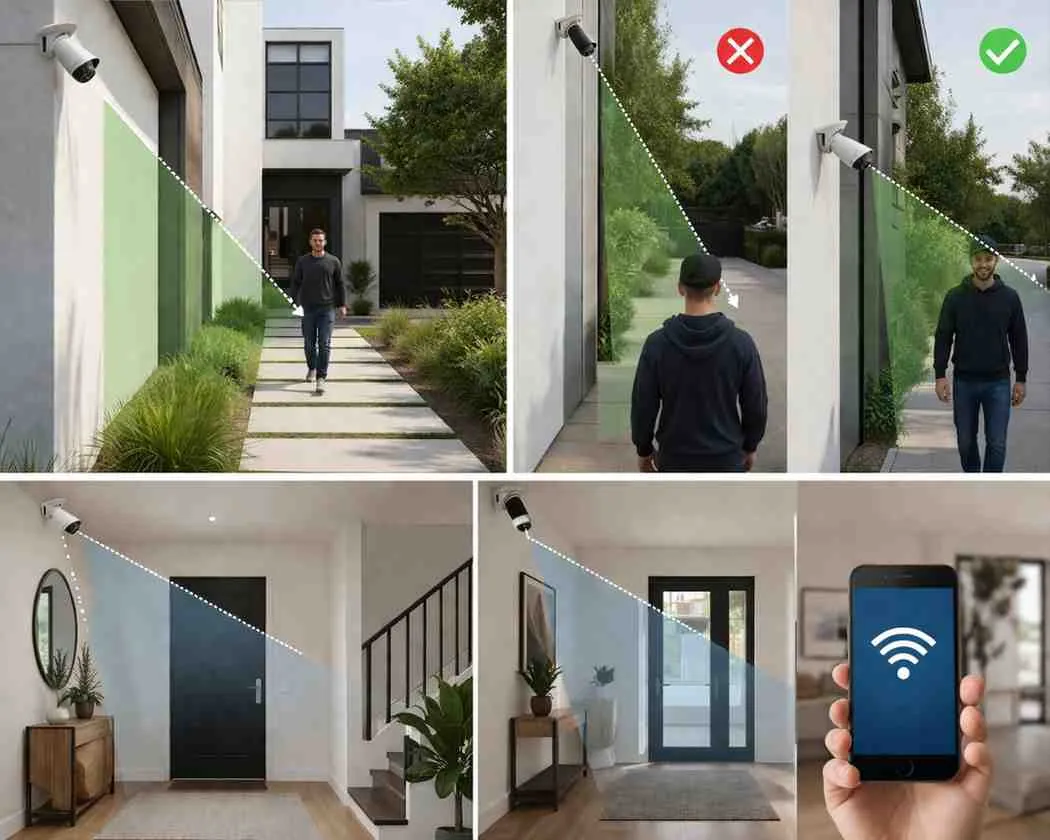
Placement location is only half the equation. Mounting height and angle determine whether footage is actually useful.
Outdoor Cameras
Indoor Cameras
4. How Many Motion Sensors Do You Need?
5. What to Avoid: The 7 Most Common Motion Sensor Mistakes
| Common Mistake | Why It Causes Problems |
|---|---|
| Placing sensor directly facing a door | Limits detection range — captures movement in front only. |
| Mounting near a heat vent/radiator | PIR sensors detect heat changes — causes false alarms. |
| Placing next to a sunny window | Sunlight and shadows trigger false alerts. |
| Mounting too high (above 8 ft) | Sensor field becomes too wide and less accurate. |
| Pointing at a pet's path | Pets on stairs or furniture can appear human-sized. |
| Installing in garage or attic | Temperature swings cause constant false triggers. |
| Placing behind large furniture | Blocks the sensor's line of sight; creates blind spots. |
6. How PIR Motion Sensors Work (Simplified)
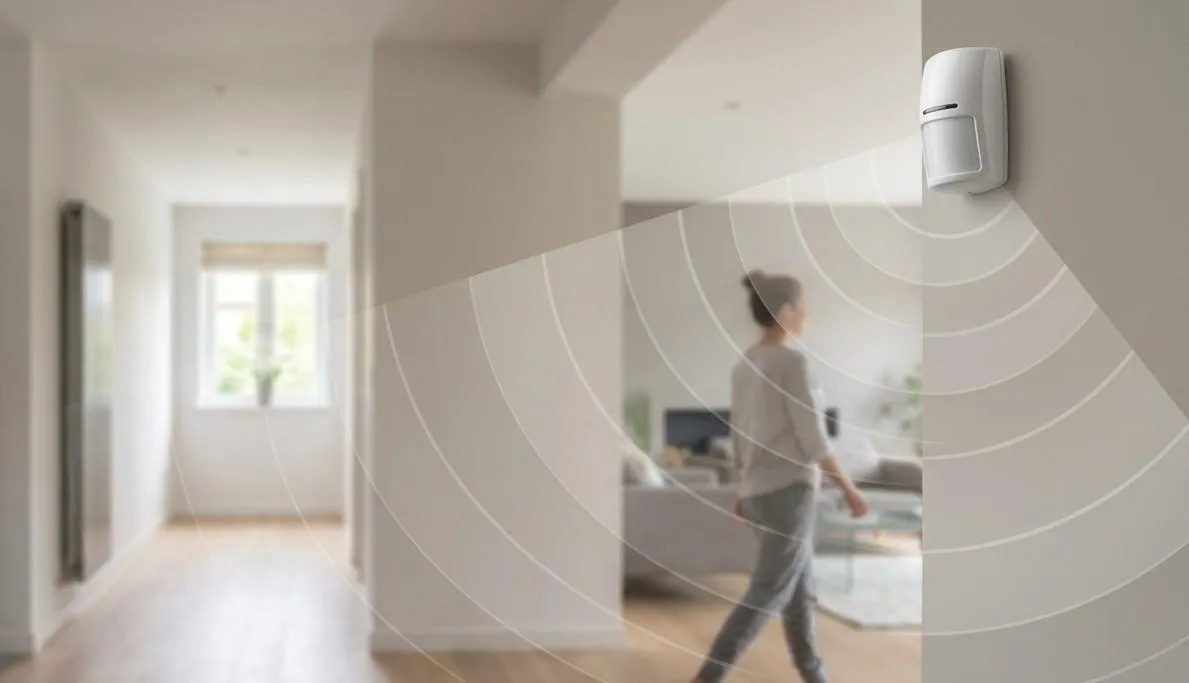
Most home security motion sensors use Passive Infrared (PIR) technology. These sensors do not emit energy; they detect changes in heat emitted by warm bodies.
PIR sensors require a clear line of sight. They are most sensitive when someone moves across their field of view rather than directly toward them. For maximum efficiency, keep sensors 10 to 15 feet away from radiators, vents, and sunny windows.