How to Secure a Large Home Effectively: Complete 2026 Guide

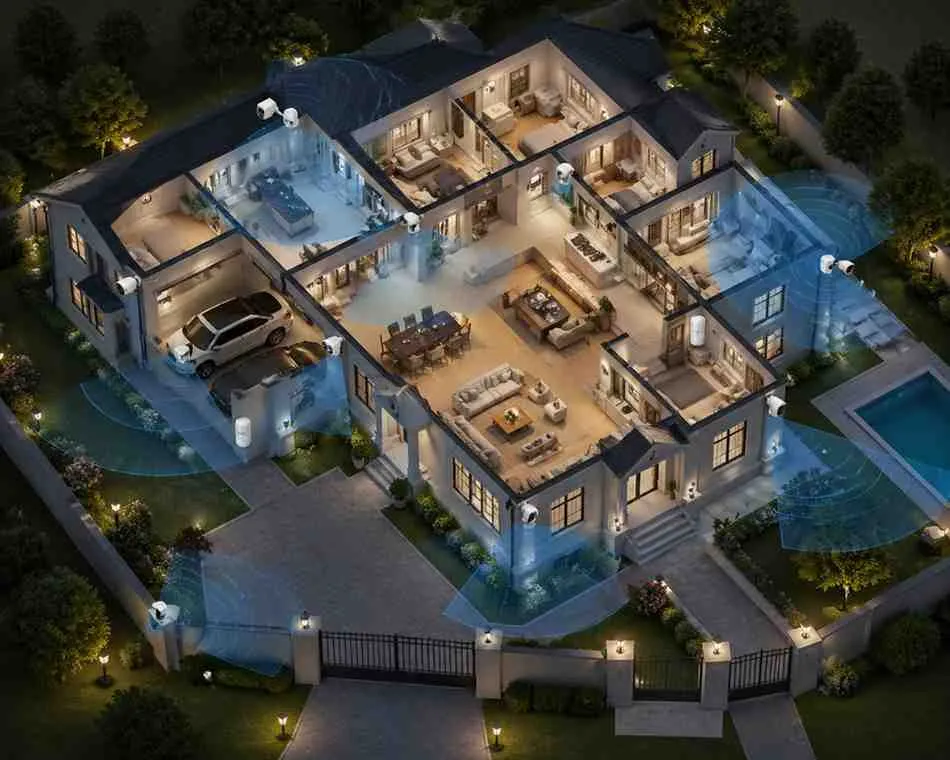
Large homes present a security challenge that starter kits and generic system recommendations cannot solve. More doors. More windows. More entry points on every side. And more distance between rooms that means a single motion sensor or camera can cover only a fraction of the property.

Quick Answer
This guide is built specifically for US homes with 4 or more bedrooms, large floor plans, or extended exterior areas. It tells you what devices you need, where to put them, and how to avoid the gaps that make large home security fail.

1. Why Large Homes Need a Different Security Strategy

Security systems designed for average homes have two weaknesses when applied to large properties:

  • Insufficient device count : a 4 or 5-bedroom home may have 8 to 12 exterior entry points. A standard starter kit covers 2 to 4 of them. The remaining entry points are unprotected blind spots.
  • Insufficient range : motion sensors have a maximum detection range of 30 to 70 feet. A large open-plan living area or long hallway may require 2 to 3 sensors to cover what a standard guide assumes is one zone.

The solution is not simply buying more devices. It is planning coverage by zone with the correct device density per zone.
Description of the image

2. Zone-by-Zone Device Plan for a Large Home

Secure a large home zone by zone, working from the outer perimeter inward. Use this as your master device reference:

Zone Devices Needed Key Placement Notes
All exterior doors Door sensor per door + outdoor camera Include garage door and any basement exterior entry
Ground-floor windows Window sensor per window Do not skip secondary and side windows
Garage interior entry Door sensor + motion sensor or indoor cam Most overlooked entry point in large homes
Main hallways (all) Motion sensor per hallway Cover every floor independently
Staircase landings Motion sensor per staircase Essential in multi-floor large homes
Driveway / front approach Wide-angle outdoor camera + floodlight Long driveways need cameras at the gate and near the house
Backyard 1 to 2 outdoor cameras covering full rear Include any outbuildings or pool areas
Side passages / gates Outdoor camera per blind-spot passage Most large homes have 2 or more side passages
Basement Door sensor + motion sensor Basement windows also need sensors

3. How Many Cameras Does a Large Home Need?

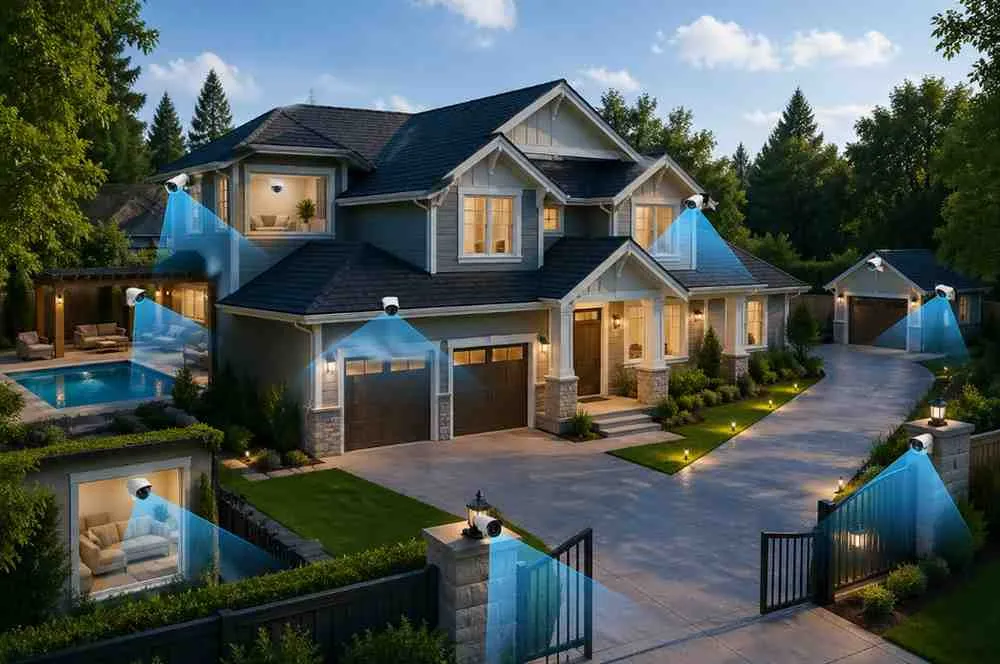
For a 4-bedroom or larger US home, plan for 6 to 10 outdoor cameras and 2 to 4 indoor cameras. The exact number depends on:

Number of exterior doors and garage doors
Number of sides of the property that are not visible from the street
Length of the driveway and front approach
Presence of outbuildings, pools, or large yards requiring dedicated cameras

As a rule of thumb, one camera per 500 square feet of outdoor area is a reasonable baseline. Wide-angle cameras (120 to 180 degrees) reduce the total number needed by covering more area per device.
Description of the image
Camera Baseline for Large Homes : 4-bedroom home with standard yard: 6 to 8 outdoor cameras. 5+ bedroom home with extended property: 8 to 12 outdoor cameras. Properties with detached garages, outbuildings, or pools: add 1 to 2 cameras per structure.

4. Why Professional Installation Is Strongly Recommended for Large Homes

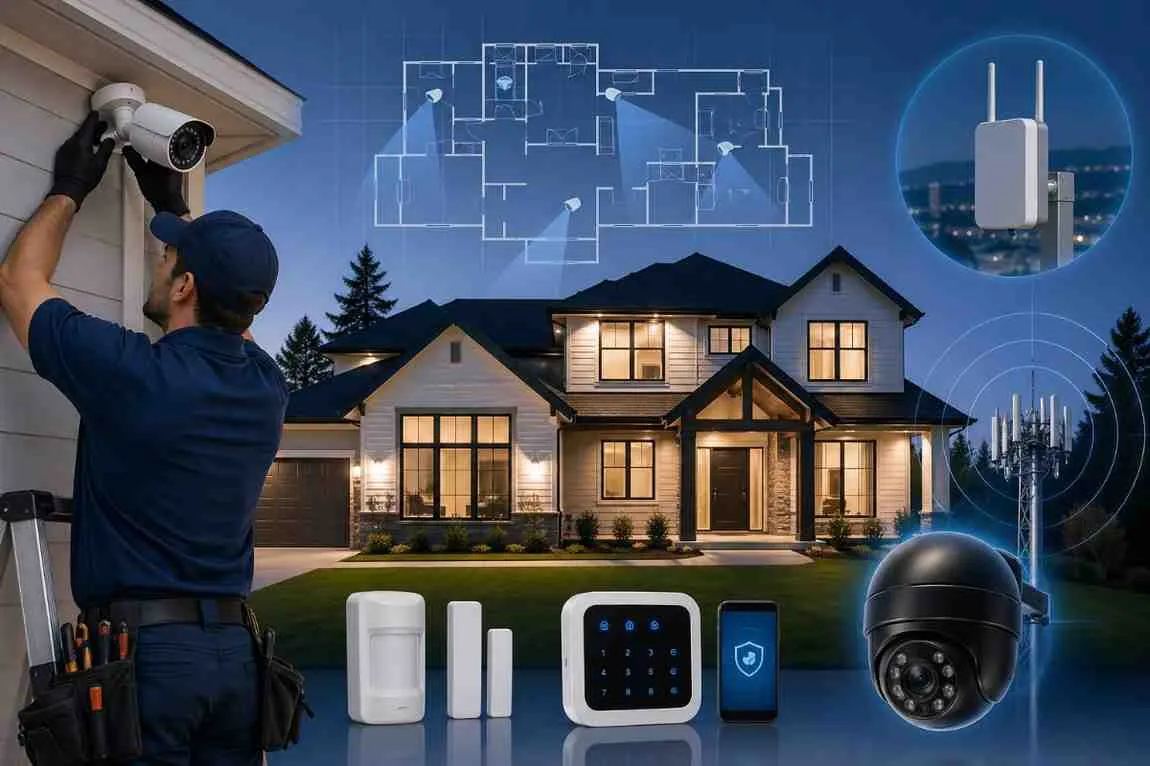
For large homes, professional installation is not just convenient — it actively improves your security outcome in ways DIY placement cannot match.
Placement Expertise
Professional installers assess your property from a security perspective, identifying blind spots that are not obvious to a homeowner walking through their own home. They know where motion sensors create false alarm risks, which angles cause camera glare, and how to eliminate coverage gaps in complex layouts.
Cellular Backup
Large homes with extensive WiFi dead zones need cellular backup on their security system. If internet goes down in one part of the property, a sensor or camera on that circuit becomes unreliable. Cellular backup ensures the monitoring connection remains active regardless of WiFi status.
Description of the image

5. Professional Monitoring Is Non-Optional for Large Homes

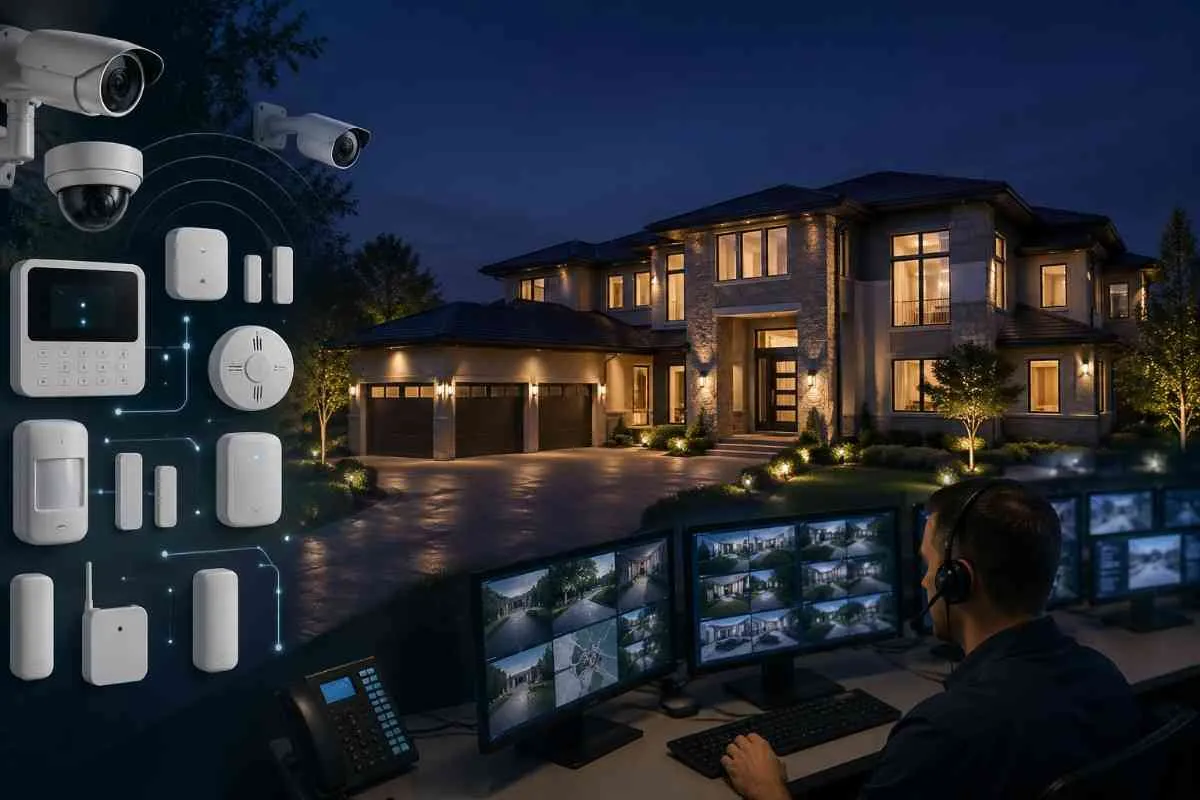
A large home with 6 to 10 cameras and 20+ sensors generates more alert activity than a smaller home. Self-monitoring in a large property means personally reviewing every alert across a complex system whenever something triggers.

Professional monitoring delegates this to a 24/7 center that reviews alerts, verifies them where possible using video, and dispatches services when needed. For a property of this size, monitoring at $40 to $60 per month is not a luxury — it is a necessary part of the security system.
Description of the image

Frequently Asked Questions

A 4-bedroom home with a standard yard needs 6 to 8 outdoor cameras for solid perimeter coverage. Larger properties with 5 or more bedrooms, extended yards, side passages, or outbuildings typically need 8 to 12 cameras. Add 2 to 4 indoor cameras for main hallways, staircase landings, and the primary living area.

For large homes, professionally installed systems from ADT or Vivint provide the most comprehensive coverage. ADT's professionally installed systems offer commercial-grade equipment, expert placement, and 12 US-based monitoring centers. Vivint provides premium equipment with Smart Deter camera technology and response times averaging 33 seconds. Both require 3-year contracts but deliver the level of reliability that large properties need.

A complete security system for a 4 to 5-bedroom US home typically costs $1,200 to $2,500+ in equipment, $300 to $500 for professional installation, and $40 to $60 per month for premium monitoring. Year 1 total costs for a large home typically range from $1,700 to $3,700. After Year 1, the ongoing cost is just the monthly monitoring fee.

Conclusion

Securing a large home is a zone-by-zone exercise. Start at the outer perimeter with cameras and floodlights. Work inward to entry point sensors on every exterior door and ground-floor window. Then add interior motion sensors covering every hallway and staircase landing. Do not apply a starter-kit mentality to a large property. The device count, placement complexity, and monitoring requirements are genuinely different. Professional installation and monitoring are the most reliable path to comprehensive coverage for a large home.

Need a complete security plan for a large home?

Brocus designs custom zone-by-zone coverage for large properties. Free consultation, no obligation, US-based experts.

Get Your Free Large Home Security Plan
(855) 786-9984