1. The Real Question: What Does Professional Monitoring Protect You From?
The honest answer is not just burglary. That is the starting point, but it is not the full picture.
Professional monitoring protects you from the gap between when something happens and when you personally respond. That gap is the risk.
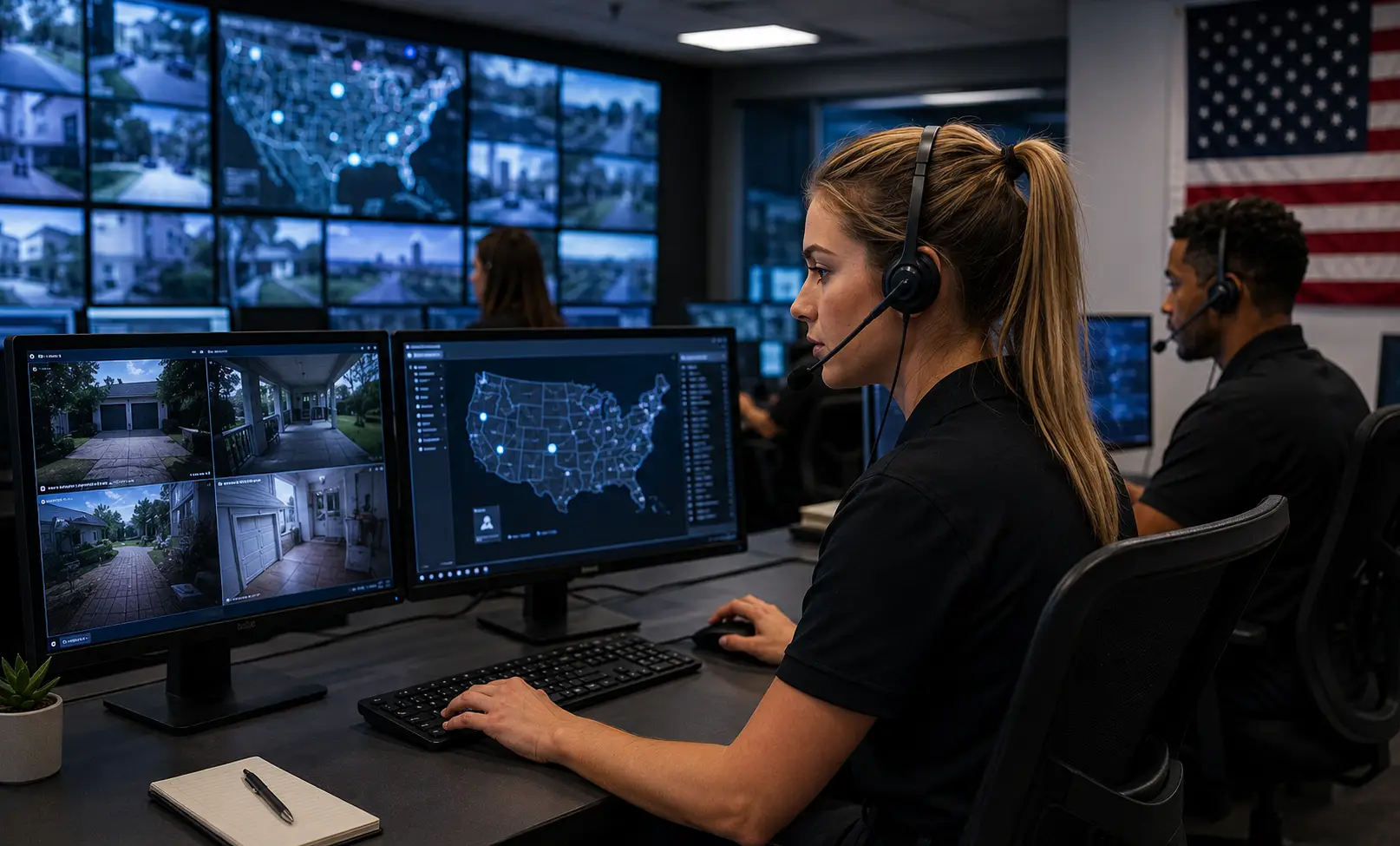
- You are asleep and your alarm triggers at 2am. Self-monitoring relies on you waking up from a phone notification. Professional monitoring calls you regardless.
- You are on a flight with no signal for 6 hours. Self-monitoring sends alerts to your phone that no one reads. Professional monitoring dispatches services.
- You are in a meeting with your phone on silent. Self-monitoring triggers, you see it 45 minutes later. Professional monitoring dispatches in under 60 seconds.
- A fire starts in your kitchen while you are in the backyard. Self-monitoring triggers your phone. Professional monitoring can dispatch the fire department at the same time you discover the smoke.
- A medical emergency occurs in your home while you are away. Self-monitoring does nothing until you respond to your phone. Professional monitoring with medical alert integration dispatches an ambulance.
The question is not whether self-monitoring works when you are alert, available, and paying attention. It does. The question is what happens in every other situation.
2. What Actually Happens When You Miss a Self-Monitoring Alert
This is the scenario most self-monitoring articles avoid describing honestly. Here is what the real chain of events looks like:
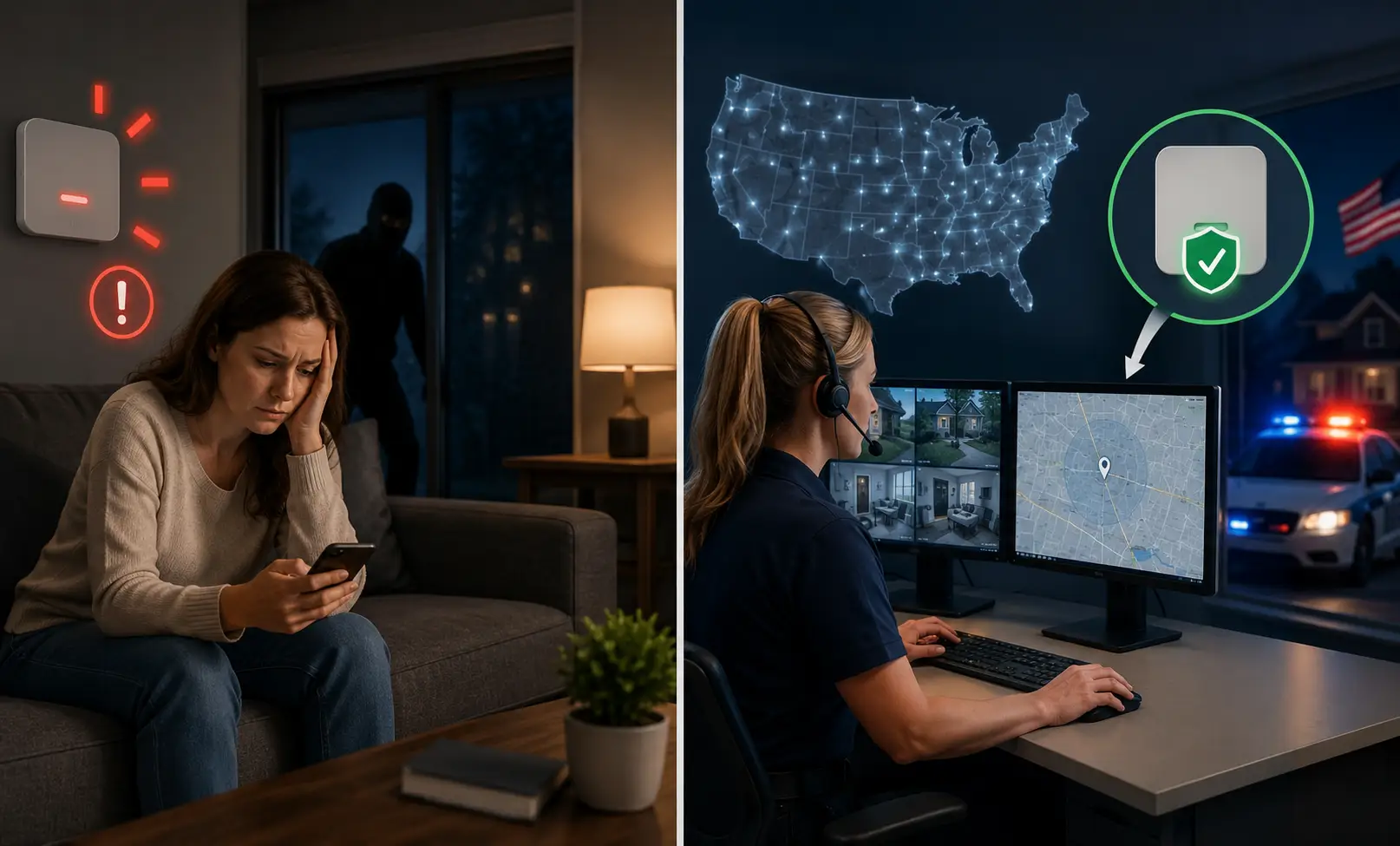
Scenario A: Motion Detected While You Are Driving (Self-Monitoring)
Your motion sensor triggers at 11:15am. Your phone receives the alert. You are driving on the highway and cannot look at your phone safely. By the time you pull over at 11:32am and check the alert, 17 minutes have passed. If it was a real intrusion, the average burglary is completed in 8 to 12 minutes. There is nothing left to prevent.
Scenario A: Motion Detected While You Are Driving (Professional Monitoring)
Your motion sensor triggers at 11:15am. The monitoring center receives the signal within seconds. An agent calls your primary number at 11:15:30. You do not answer. They call your secondary contact at 11:15:50. Police are dispatched by 11:16:30. Total elapsed time before dispatch: under 90 seconds.
Scenario B: Alarm Triggered at Night While You Are Asleep (Self-Monitoring)
Your alarm triggers at 3:10am. Your phone buzzes on silent on your nightstand. You do not wake up. You discover the alert at 7:00am. The break-in occurred and was completed hours ago.
Scenario B: Alarm Triggered at Night While You Are Asleep (Professional Monitoring)
Your alarm triggers at 3:10am. The monitoring center calls you at 3:10:30. Your phone rings loud enough to wake you. You confirm it is a real alarm. Police are en route by 3:11. Response is immediate, not hours later.
3. Response Time Data: How Fast Do Professional Monitoring Centers Respond?
Independent testing by Security.org in 2026 measured response times for major professional monitoring providers by simulating real alarm triggers:
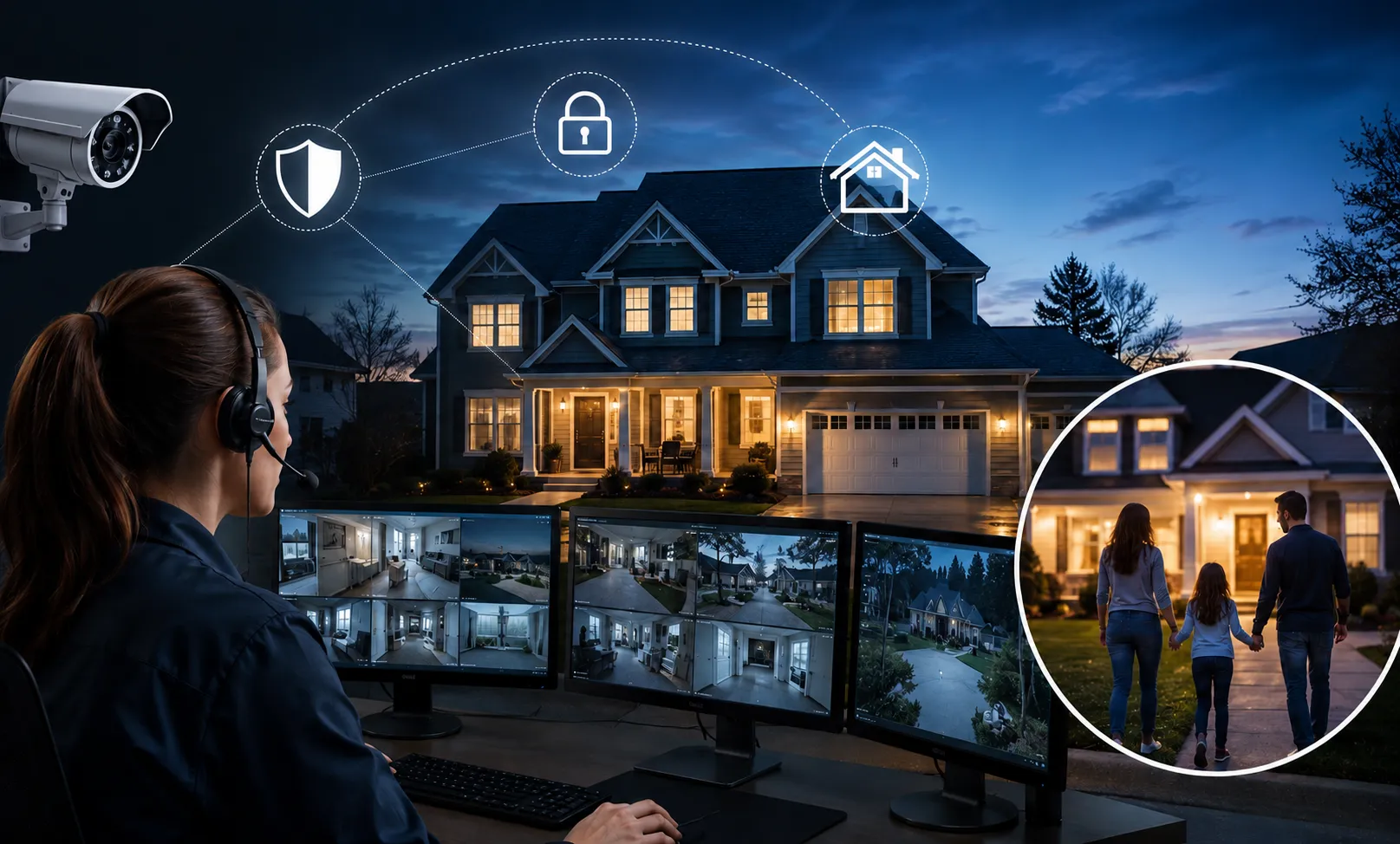
- Vivint: average response time of 33 seconds from alarm trigger to monitoring center call
- ADT: police reported arriving within 5 minutes of dispatch in their testing scenario
- SimpliSafe Active Guard: live agents can begin responding to AI-identified threats before an alarm is manually triggered
The average residential burglary in the US lasts between 8 and 12 minutes according to emergency response professionals. A professional monitoring response in under 60 seconds means police can realistically arrive before or during the intrusion. Self-monitoring with a 10 to 45-minute response window by the homeowner does not offer the same protection.
Key Statistic: 83% of burglars check for an alarm before attempting a break-in. 60% say they would move to a different target if they found signs of an alarm system. Only 13% would continue an attempt if they discovered an active alarm. Professional monitoring amplifies this deterrent effect because burglars know that an active monitored system means police dispatch in under 2 minutes.
4. The 7 Scenarios Where Professional Monitoring Clearly Pays For Itself
In each of the following situations, professional monitoring provides a level of protection that self-monitoring structurally cannot match:
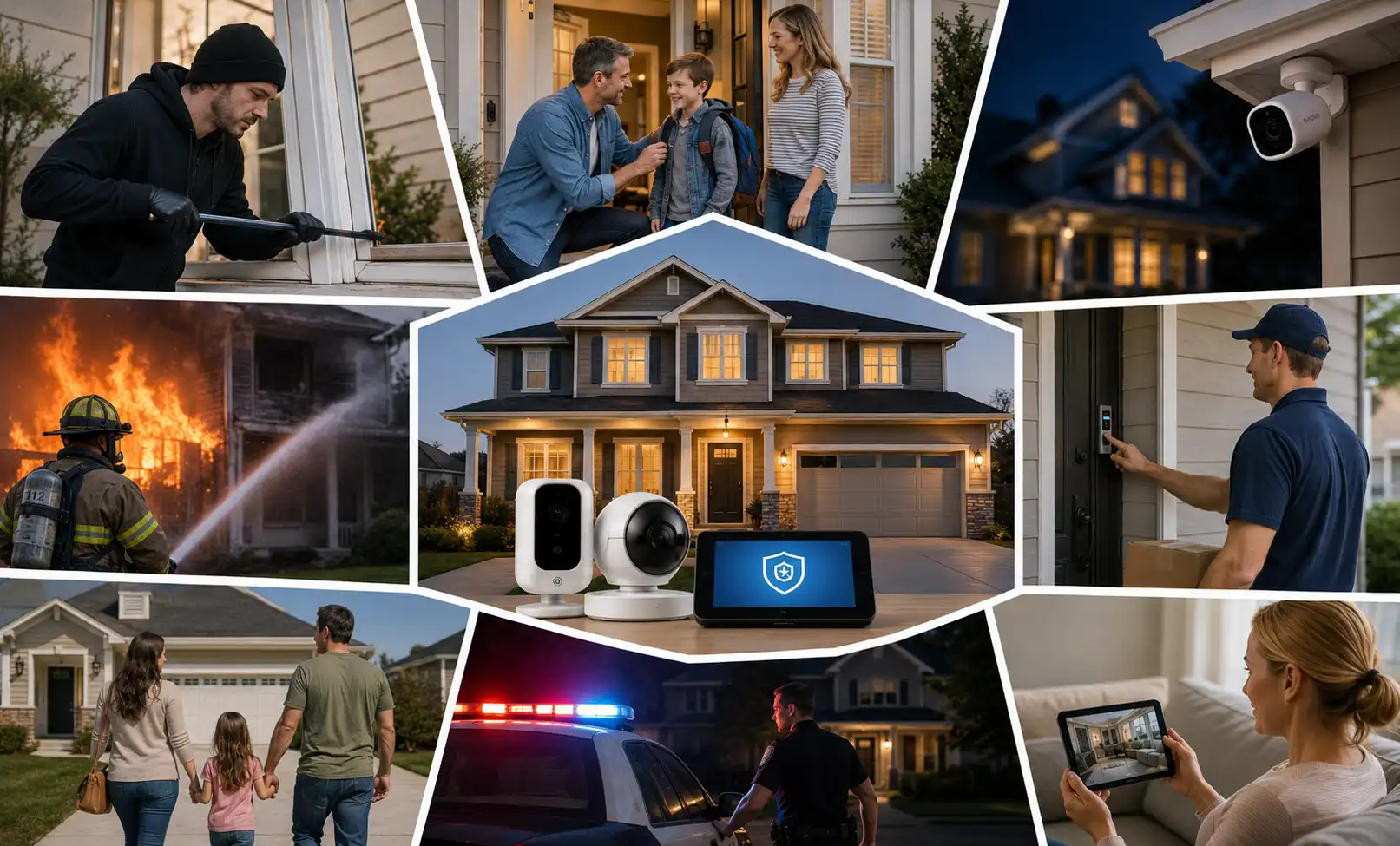
Scenario 1: You Travel Frequently
If your home is empty for 3 or more days at a time on a regular basis, professional monitoring is not optional. It is the difference between having someone respond on your behalf and having an alert go unread for hours while you are on a plane or in a foreign time zone.
Scenario 2: You Have Children at Home
Children cannot respond to security alerts. They cannot call 911 calmly in an emergency. A professional monitoring center responds regardless of whether the adult homeowner is reachable, and can coordinate emergency services even if a child is the only person home.
Scenario 3: You Have Elderly Family Members at Home
Many professional monitoring plans include medical alert integration. If a fall or medical emergency occurs, the monitoring center can dispatch medical services even when no phone call is made. This feature alone justifies the monthly cost for many families.
Scenario 4: You Have a Vacation Home or Second Property
Properties that sit empty for weeks at a time are among the most commonly targeted by burglars. Professional monitoring means a human is watching the property 24/7 regardless of whether the owner is thinking about it.
Scenario 5: You Live in an Area With Longer Police Response Times
In many US suburban and rural areas, police response to a 911 call averages 10 to 18 minutes. Professional monitoring optimizes the dispatch timeline. Every minute saved at the notification and dispatch stage directly reduces the window a burglar has to operate.
Scenario 6: You Want the Maximum Homeowners Insurance Discount
Most insurers offer the highest discount tier (10% to 20%) only to professionally monitored systems. Self-monitored systems typically qualify for lower discounts (5% to 10%). For a US homeowner paying $2,300 per year on insurance, the difference between a 10% and 15% discount is $115 per year.
Scenario 7: You Own a High-Value Property or Have Significant Valuables
The average loss per residential burglary in the US is approximately $5,500 according to recent FBI data. For homes with high-value jewelry, electronics, art, or collectibles, the risk of loss far exceeds the annual monitoring cost of $240 to $720.
5. The 3 Situations Where Self-Monitoring Is Genuinely Adequate
To be fully honest: professional monitoring is not always necessary. Here are three situations where self-monitoring is a legitimate and sensible choice:
Situation 1: Small Apartment or Studio With Simple Security Needs
A studio or one-bedroom apartment has a limited number of entry points. A video doorbell and 1 to 2 door sensors cover the entire perimeter. If you are almost always home or consistently reachable, self-monitoring through an app provides real-time alerts that you will actually see and act on quickly.
Situation 2: You Are Almost Always Reachable and Respond Immediately
If you work from home, almost never travel overnight, and have a habit of keeping your phone on and checking notifications quickly, the realistic response gap between self-monitoring and professional monitoring shrinks considerably. In a low-crime neighborhood with a simple security setup, this can be adequate.
Situation 3: You Are Testing a System Before Committing
Starting with free self-monitoring while you evaluate a new security system is a reasonable first step. Most providers offer a 30-day free trial of professional monitoring. Using the free self-monitoring period to learn the system, adjust sensor sensitivity, and confirm everything works before subscribing to a paid plan is a sensible approach.
6. The Insurance Math Most Homeowners Never Calculate
This is the section that changes the calculation for most people. Professional monitoring does not just provide protection. It can actively reduce what you pay for homeowners insurance every year.

Most US insurers offer 10% to 15% discounts for professionally monitored home security systems. Here is what that looks like in real dollars across different annual premium levels:
| Annual insurance premium | 10% discount saves | Monitoring cost (12 months) | Net annual cost after savings |
|---|---|---|---|
| $1,500 | $150 | $360 ($30/month) | $210 |
| $2,000 | $200 | $360 ($30/month) | $160 |
| $2,300 (US average) | $230 | $360 ($30/month) | $130 |
| $2,500 | $250 | $360 ($30/month) | $110 |
| $2,300 (US average) | $345 (15% discount) | $480 ($40/month) | $135 |
For the average US homeowner with a $2,300 insurance premium and $30 per month monitoring, the net annual cost of professional monitoring after insurance savings is approximately $130. That is $10.83 per month for 24/7 professional dispatch, cellular backup, and the full insurance discount.
Action Step: To claim your insurance discount, request a monitoring certificate from your security provider once your system is active. Most providers issue this automatically or on request. Send it to your insurance agent and ask them to apply the discount at your next policy renewal.
7. Which Level of Professional Monitoring Do You Actually Need?
Not all professional monitoring is the same. Here is a practical guide to matching the monitoring tier to your actual situation:
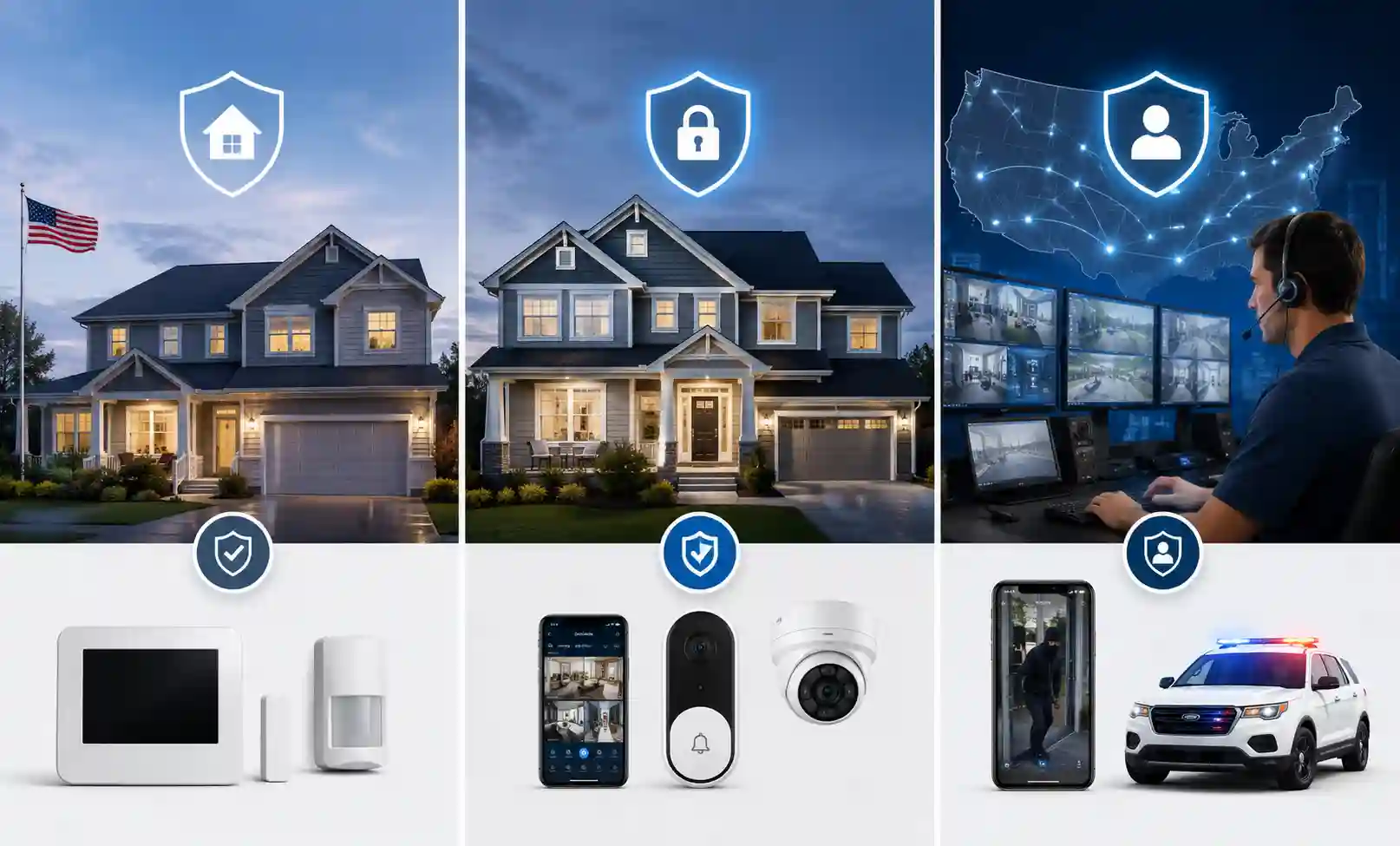
Standard Professional Monitoring ($20 to $40/month)
Covers the core use case: a trained center receives your alarm signal, calls you, and dispatches emergency services if needed. Includes cellular backup so the system works if your internet goes down. This tier is adequate for the vast majority of US homeowners.
Best for: most family homes, homeowners who travel occasionally, properties with standard security needs.
Premium Monitoring with Video Verification ($40 to $60/month)
Adds camera review before dispatch. An agent reviews footage to confirm whether the alarm is genuine before calling police. This significantly reduces false alarms and speeds up verified dispatch. Worth the additional cost for homes with outdoor cameras.
Best for: homeowners with multiple cameras, people in areas where police take longer to respond to unverified alarms, anyone who has experienced false alarm fines.
Live Agent Deterrence ($60 to $80/month)
The highest tier includes live agent interaction with potential intruders. SimpliSafe's Active Guard can have a monitoring agent speak through outdoor cameras to a lurker before they even attempt entry. This is the most proactive form of monitoring available to US homeowners in 2026.
Best for: high-value properties, frequent travelers, vacation homes, anyone who wants the strongest possible deterrent.
8. Who Should Get Professional Monitoring? A Clear Verdict by Situation
Here is a direct answer by home situation with no ambiguity:
| Your Situation | Verdict | Reason |
|---|---|---|
| Homeowner, 3+ bedroom home | Worth it | Multiple entry points, larger property needs expert-grade monitoring |
| Family with children at home | Worth it | Someone always needs to be protected — missed alerts have real consequences |
| Frequent traveler, home often empty | Worth it | The core use case for professional monitoring. High value. |
| Renter in a studio apartment | Maybe | A DIY system with optional pro monitoring may suffice. Lower risk profile. |
| Tech-savvy user, always on phone | Maybe | Self-monitoring can work if you never miss an alert and can respond fast |
| Home in low-crime area, single person | Maybe / Skip | Self-monitoring may be adequate. Get pro monitoring if you travel. |
| Vacation home or second property | Worth it | Empty for extended periods. Professional dispatch is critical. |
Not sure which monitoring level is right for your home? Brocus gives you a free, honest recommendation based on your actual situation. Not the most expensive option. The right option.