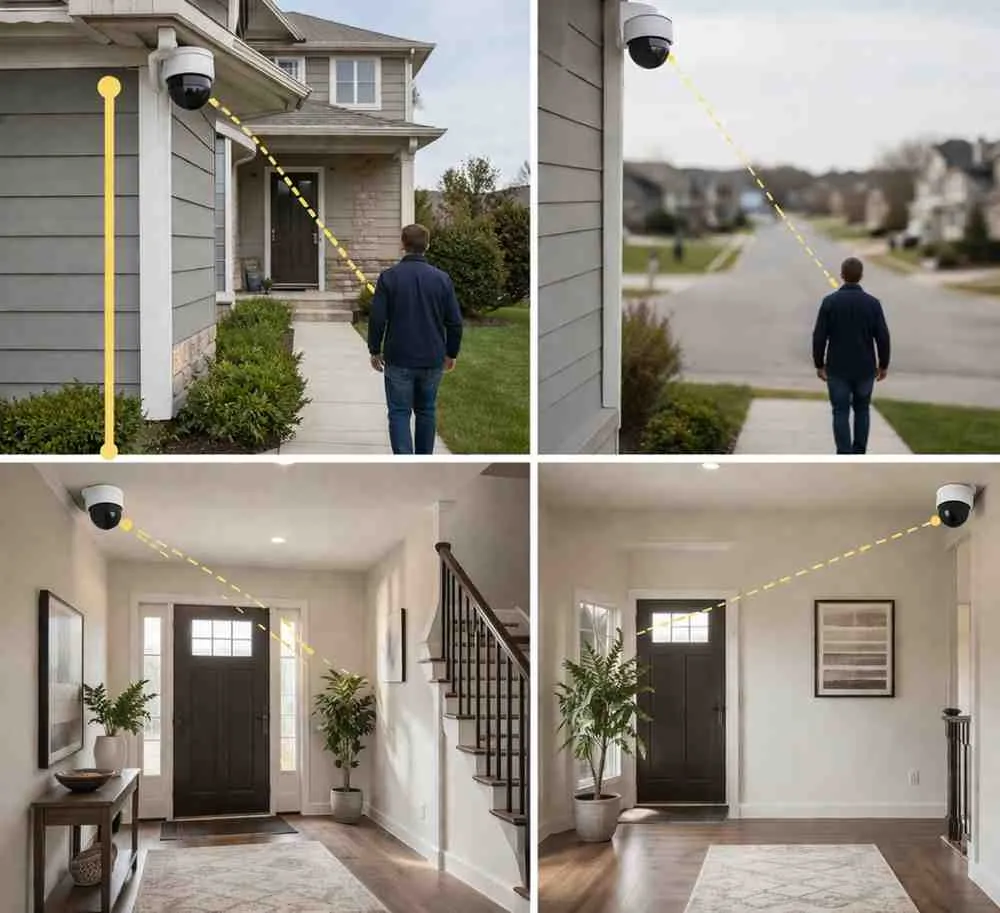
1. The Core Principle: Cover Choke Points First
A choke point is any location in your home where movement is unavoidable — hallways, staircases, and connecting doorways.
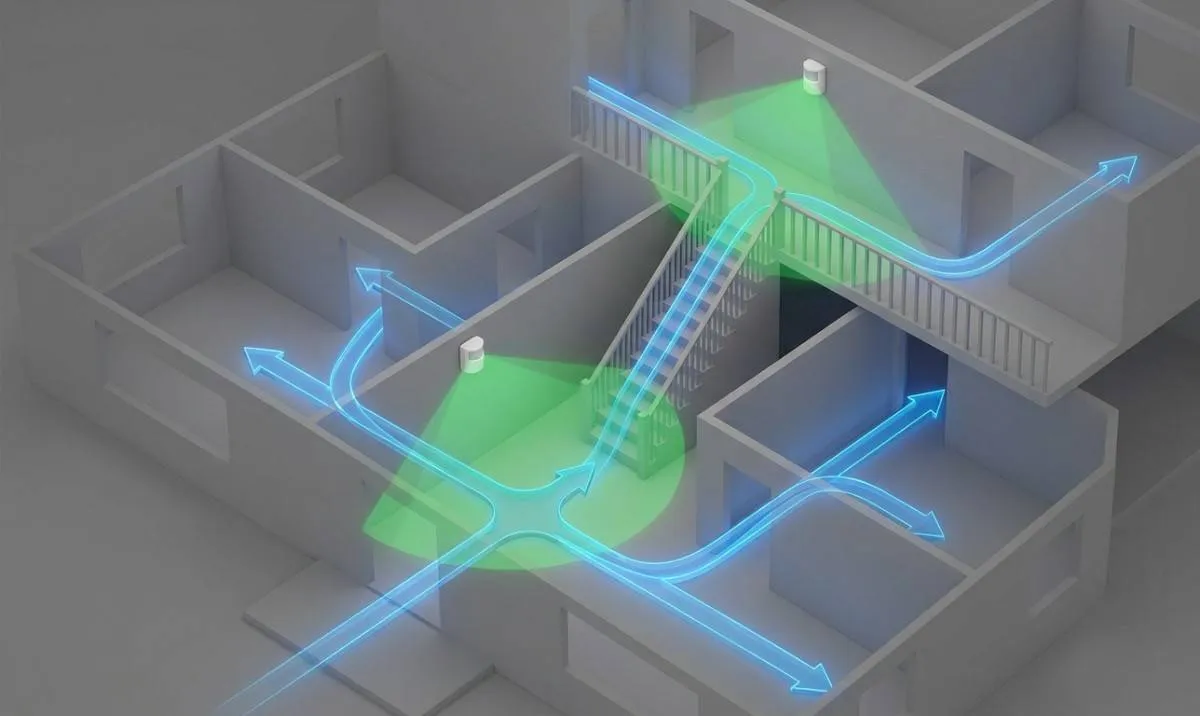
If you only have one or two motion sensors, place them here. One sensor in the main hallway and one at the top of a staircase can cover most intrusion paths in a typical 2-story home.
2. Room-by-Room Motion Sensor Placement Guide
Swipe Right
| Location | Priority | Sensor Height | Why This Location |
|---|---|---|---|
| Main hallway | Critical | 6–7 ft | Choke point — unavoidable path |
| Staircase landing | Critical | 6 ft | Detects floor movement instantly |
| Living room corner | High | 7 ft | High-traffic area |
| Garage entry | High | 6–7 ft | Common entry point |
| Bedroom hallway | High | 6–7 ft | Protects sleeping areas |
| Basement entry | Medium | 6 ft | Often overlooked |
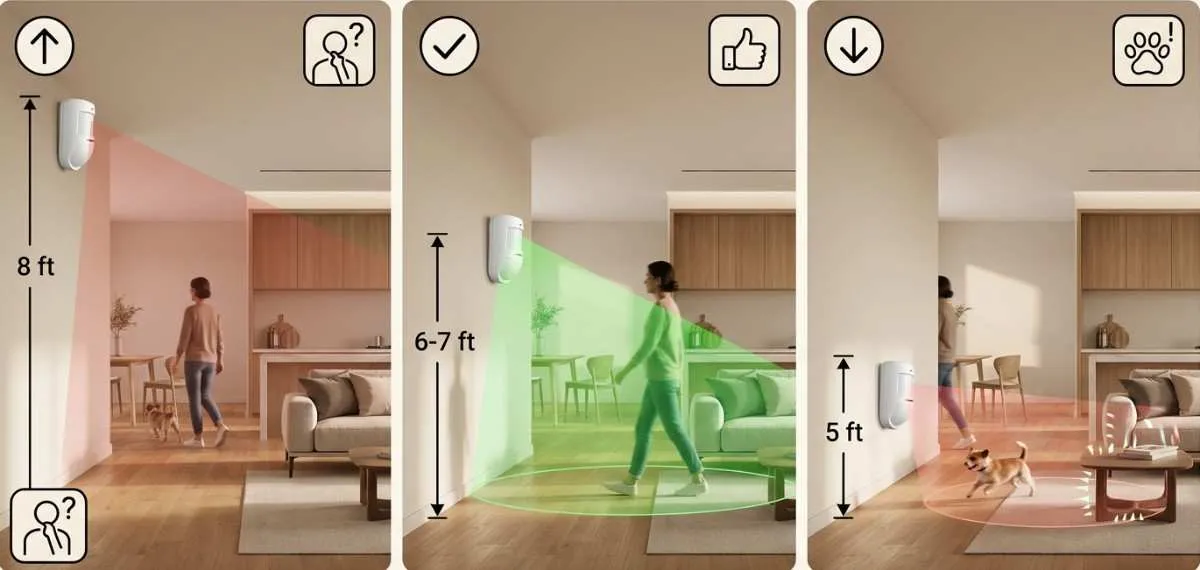
3. Optimal Motion Sensor Mounting Height
Recommended height: 6 to 7 feet above the floor.
Above 8 ft
Reduced accuracy and blind spots directly below.
Recommended
6–7 ft
Best balance of range and coverage.
Below 5 ft
Triggers easily from pets and obstacles.
4. How Many Motion Sensors Do You Need?
Studio / 1-bedroom
1 sensor
2-bedroom
1–2 sensors
3-bedroom (single floor)
2–3 sensors
3-bedroom (two floors)
3–4 sensors
4-bedroom+
4–6 sensors
5. Common Motion Sensor Mistakes
Swipe Right
| Mistake | Why It’s a Problem |
|---|---|
| Facing a door directly | Limits the time the sensor has to detect motion. |
| Near vents/radiators | Rapid temperature changes trigger false alarms. |
| Facing windows | Sunlight and outdoor heat cause false triggers. |
| Behind furniture | Physical objects block the "sight" of the sensor. |
6. How PIR Motion Sensors Work
Passive Infrared (PIR) sensors detect heat changes. They require a clear line of sight and work most effectively when movement occurs across their field of view rather than directly toward them.