1. How DIY and Professional Systems Work Differently
The core difference between DIY and professionally installed systems is not just who installs the hardware. It affects everything from sensor placement to long-term support to how your system responds in an emergency.
DIY Home Security Systems
With a DIY system, you purchase equipment directly, usually online or at a retail store, and install everything yourself. Modern DIY systems from brands like Ring, SimpliSafe, and Abode are designed to be installed in under an hour without tools. Sensors use adhesive backing. Cameras plug in or use batteries. The app walks you through setup step by step.
You choose whether to self-monitor for free or pay for optional professional monitoring. There is typically no long-term contract required. You can cancel, move, or expand the system at any time.
- Best DIY system brands in 2026: SimpliSafe, Ring, Cove, Abode, ADT Self Setup
- Average setup time: 30 minutes to 2 hours depending on home size
- 52% of DIY users report at least one setup or connectivity issue (Parks Associates, 2026)
Professionally Installed Systems
With a professional system, a certified technician visits your home, conducts a security assessment, positions every sensor and camera in the optimal location, and confirms the entire system is working before leaving. You do not touch the hardware at all.
Professional installers bring expertise that most homeowners do not have. They know where motion sensors miss coverage at the wrong height, which windows are most vulnerable, and how to avoid false alarm triggers from pets or air vents. This expertise directly translates into better coverage and fewer missed incidents.
- Professional installation cost in 2026: $99 to $500 depending on home size and system complexity
- ADT professional installation starts at $100
- SimpliSafe third-party professional install (via OnTech) starts at $124.99
- Vivint professional installation is typically $199 to $200, often waived in promotions
Brocus Insight : The biggest risk with DIY installation is not whether you can connect the app. It is whether sensors are placed correctly. A motion sensor installed at the wrong height or in the wrong corner creates a blind spot a burglar can walk right through. Professional placement eliminates this risk entirely.
2. Full Cost Comparison: DIY vs Professional (2026)
Here is the complete side-by-side breakdown of all costs across both options. A hybrid option — where you install yourself but use professional monitoring — is included as it is often the best value for US homeowners.
| Factor | DIY System | Professional System | Hybrid Option | Notes |
|---|---|---|---|---|
| Equipment cost | $130 to $500 | $500 to $2,500+ | $200 to $800 | DIY kits from Ring, SimpliSafe |
| Installation cost | $0 (self-install) | $99 to $500 | $99 to $199 | Pro install adds placement expertise |
| Monitoring (avg monthly) | $0 to $20 | $25 to $60 | $20 to $45 | DIY avg $23.92 vs pro avg $42.24 |
| Contract required? | No | Often (2 to 3 years) | Sometimes | No-contract options: Ring, SimpliSafe |
| Can you move it? | Yes, easily | Limited or costly | Partially | Vivint charges ~$150 to reinstall |
| Technical support | Limited (app/chat) | Full (on-site) | Partial | Pro systems include service calls |
| Equipment warranty | 1 to 2 years typical | Extended (often 3 to 5 yr) | Varies | Check terms before purchase |
| Insurance discount | 5% to 10% | 10% to 20% | 10% to 15% | Pro monitoring unlocks full discount |
Pricing Disclaimer: All pricing data above is sourced from publicly available third-party reviews as of April 2026. Prices for specific brands including Ring, SimpliSafe, ADT, and Vivint may change at any time. Brocus Home Security is an independent advisory service with no commercial relationship with any brand listed. Always confirm current pricing directly with the provider before making any purchasing decision.
3. Pros and Cons of Each Option
DIY Home Security System: Pros
- Lower upfront cost, starting from $130 for a basic kit
- No contract required on most platforms — cancel or change anytime
- Portable: take the system with you if you move
- Install on your own schedule, no need to wait for a technician appointment
- Customizable: start small and add devices over time
- Works for apartments and rental properties where drilling is restricted
DIY Home Security System: Cons
- Sensor placement is entirely your responsibility — incorrect placement creates blind spots
- 52% of DIY users experience at least one setup or connectivity issue
- Limited technical support if something goes wrong after installation
- Shorter warranties: typically 1 to 2 years compared to 3 to 5 years for professional systems
- Self-monitoring means you are responsible for every alert — if you miss it, nothing happens
- DIY equipment is consumer-grade, not commercial-grade
Professional Home Security System: Pros
- Expert placement by a trained technician who assesses your home's specific vulnerabilities
- Commercial-grade equipment built for longer use and fewer failures
- 24/7 professional monitoring included with most plans
- Full technical support: on-site service calls, remote troubleshooting, equipment replacement
- Extended warranties, often 3 to 5 years with service plan
- Qualifies for the full homeowners insurance discount (up to 20% off premiums)
- Better suited for large homes, families, and homeowners who travel frequently
Professional Home Security System: Cons
- Higher upfront cost: $500 to $2,500+ for equipment plus $99 to $500 for installation
- Many professionally installed systems require a 2 to 3-year monitoring contract
- Early termination fees can be 75% to 100% of remaining contract balance if you cancel early
- Moving fees may apply: Vivint charges approximately $150 to reinstall at a new address
- Appointment scheduling required: you must be home for a 2 to 4-hour installation window
4. Wired vs Wireless Security Systems
This question comes up often in the DIY vs professional debate. Here is what you need to know:
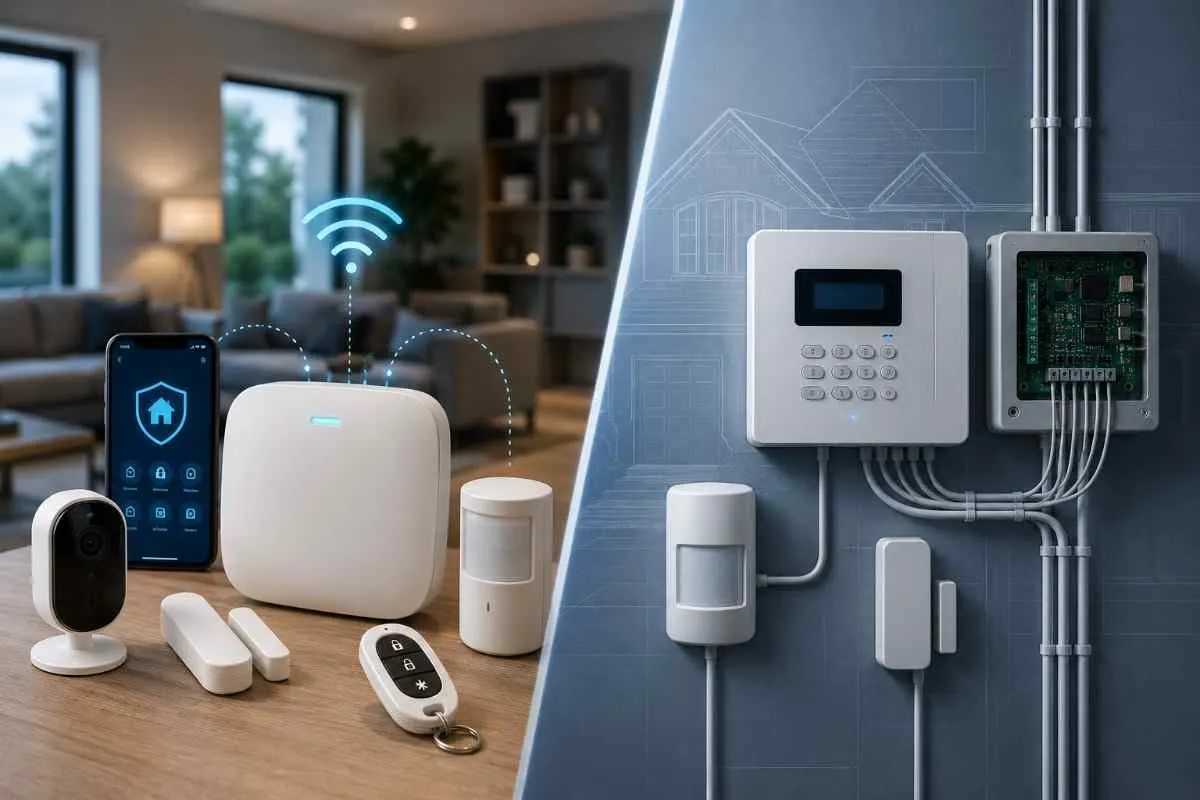
Wireless systems are the modern standard for both DIY and professionally installed setups. Sensors communicate via WiFi, Zigbee, or Z-Wave. No drilling through walls is required. They are easy to install and easy to move.
- Cost: $200 to $2,000 depending on components
- Installation: DIY possible in most cases
- Flexibility: portable, renter-friendly, expandable
- Limitation: relies on WiFi and battery power. Cellular backup recommended
Wired systems run cables through your walls and connect sensors directly to a central panel. They are more reliable in the sense that there is no WiFi dependency, but they require professional installation and are more complex to expand or move.
- Cost: $800 to $1,600 for installation including labor
- Installation: professional required in almost all cases
- Reliability: no WiFi dependency, harder to jam or disrupt
- Limitation: not portable, costly to modify, requires wall work
For the vast majority of US homeowners in 2026, a wireless system is the right choice. The technology is now reliable enough that the portability and lower cost of wireless outweigh the stability benefit of wired. Wired systems remain preferable for large permanent properties where you plan to stay long-term and want the most robust infrastructure.
5. Three-Year True Cost Breakdown
Year 1 cost is often misleading because it combines equipment, installation, and monitoring. The table below shows what you actually spend over three full years across four common scenarios:
| Scenario | Year 1 Cost | Year 2 to 3 (each) | 3-Year Total (approx.) |
|---|---|---|---|
| DIY + self-monitor | $300 to $600 | $0 to $240 | $300 to $1,080 |
| DIY + basic pro monitoring | $540 to $860 | $240 to $480 | $1,020 to $1,820 |
| Professional install + standard monitoring | $900 to $1,600 | $300 to $540 | $1,500 to $2,680 |
| Premium pro system + full monitoring | $1,400 to $2,500+ | $480 to $960 | $2,360 to $4,420+ |
Key Takeaway: A professionally installed system with standard monitoring often costs only $500 to $900 more over three years than a mid-range DIY system with basic monitoring, once you account for insurance savings. That difference shrinks further when you consider the longer equipment warranty and lower false alarm rate of professionally installed systems.
6. Who Should Choose Which Option?
There is no single right answer. The best choice depends entirely on your home, your lifestyle, and your budget. Use this table as a starting guide:

| Your Situation | Best Choice | Why |
|---|---|---|
| Renter, apartment, studio | DIY system | Portable, no drilling, no contract |
| First-time homeowner on a budget | DIY + basic pro monitoring | Lower upfront, flexible, cancellable |
| 3+ bedroom family home | Professional install + monitoring | Expert placement, full coverage, 24/7 response |
| Large home, frequent traveler | Full professional system | Maximum coverage, insurance optimized |
| Tech-savvy homeowner, low-risk area | DIY self-monitor | Free monthly, full app control |
| Limited mobility or non-technical user | Professional install | No DIY frustration, done for you |
| Renting, plan to move within 2 years | DIY, no contract | Take it with you, no termination fees |
7. The Hybrid Option Most People Miss
There is a third path that many US homeowners overlook: install the hardware yourself and add professional monitoring from a third-party provider.
This approach gives you the cost savings of DIY installation with the 24/7 response coverage of professional monitoring. SimpliSafe is one of the most popular examples of this hybrid model. You set it up yourself in under an hour, then subscribe to professional monitoring at $22.99 to $32.99 per month on a month-to-month basis with no contract.
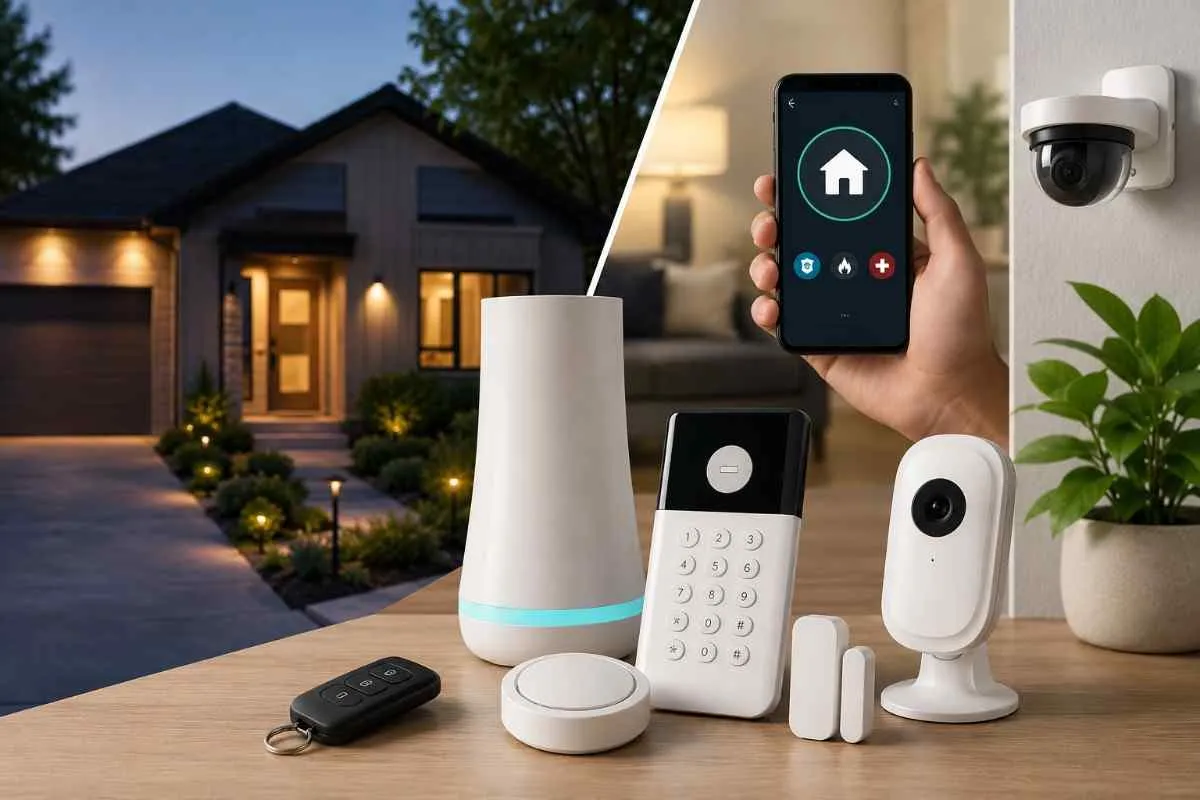
The hybrid model is particularly well-suited for homeowners who are comfortable with technology but want the peace of mind of professional dispatch. It also qualifies for homeowners insurance discounts equivalent to a fully professionally installed system, as long as monitoring is active and certified.
8. How to Get Professional Quality Without the Contract
The main objection most homeowners have to professional systems is the multi-year contract. Here is how to get most of the benefits of professional installation without the long-term commitment:
- Choose a no-contract provider. SimpliSafe, Cove, Ring, and Abode all offer professional monitoring on a month-to-month basis. You can cancel at any time with no termination fee.
- Ask ADT about their Self Setup option. ADT now offers a DIY installation path that starts at $24.99 per month monitoring without a long-term contract. You get ADT-quality monitoring with DIY flexibility.
- Use a third-party professional installer. Several companies offer brand-agnostic professional installation for DIY systems, giving you expert placement without being locked into one provider's contract. SimpliSafe offers this via OnTech starting at $124.99.
- Start with DIY and upgrade to professional installation later. Most Ring and SimpliSafe devices can be professionally installed at any point after your initial DIY setup, if you decide you want that expertise added.